About Satantango
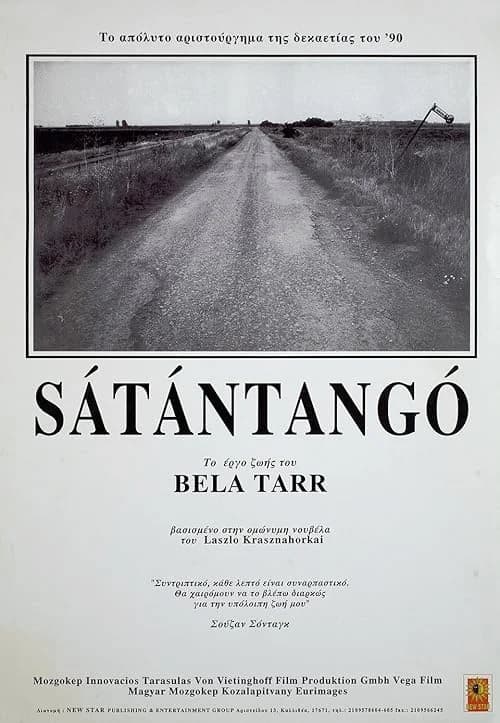
Bela Tarr's 'Satantango' (1994) stands as one of cinema's most monumental achievements—a 7-hour Hungarian epic that transforms a simple narrative into a profound meditation on time, decay, and collective disillusionment. Set in a rain-soaked, mud-caked collective farm on the brink of collapse, the film follows residents awaiting a large payment while rumors circulate about the return of Irimiás, a charismatic former co-worker believed dead. What unfolds is less a conventional plot than a meticulously observed portrait of human desperation, betrayal, and fleeting hope, structured around hypnotic long takes that immerse viewers in the characters' bleak existence.
The film's extraordinary length—439 minutes—is integral to its power. Tarr's deliberate, unhurried direction forces audiences to experience the same temporal drag as the characters, creating an almost physical sense of their entrapment. The black-and-white cinematography by Gábor Medvigy is breathtaking, capturing the decaying landscape with such texture that every puddle and crumbling wall feels palpable. Mihály Vig's haunting, repetitive score adds another layer of mesmerizing rhythm, making the film feel like a slowly turning music box of despair.
Performances are uniformly naturalistic, with the ensemble cast embodying their roles with a weary authenticity that never feels performative. The central figure of Irimiás (played by Mihály Vig) looms over the narrative like a messianic specter, his promised return driving the community's fragile dynamics toward inevitable disintegration. While demanding, 'Satantango' rewards patient viewers with an unparalleled cinematic experience—a work that uses its extreme duration not as gimmick but as essential philosophy. For those willing to surrender to its rhythm, it offers a haunting, immersive journey into the slow unraveling of dreams and the weight of collective waiting. This is cinema as profound contemplation, and it remains a landmark achievement in world film.
The film's extraordinary length—439 minutes—is integral to its power. Tarr's deliberate, unhurried direction forces audiences to experience the same temporal drag as the characters, creating an almost physical sense of their entrapment. The black-and-white cinematography by Gábor Medvigy is breathtaking, capturing the decaying landscape with such texture that every puddle and crumbling wall feels palpable. Mihály Vig's haunting, repetitive score adds another layer of mesmerizing rhythm, making the film feel like a slowly turning music box of despair.
Performances are uniformly naturalistic, with the ensemble cast embodying their roles with a weary authenticity that never feels performative. The central figure of Irimiás (played by Mihály Vig) looms over the narrative like a messianic specter, his promised return driving the community's fragile dynamics toward inevitable disintegration. While demanding, 'Satantango' rewards patient viewers with an unparalleled cinematic experience—a work that uses its extreme duration not as gimmick but as essential philosophy. For those willing to surrender to its rhythm, it offers a haunting, immersive journey into the slow unraveling of dreams and the weight of collective waiting. This is cinema as profound contemplation, and it remains a landmark achievement in world film.