About 20 Days in Mariupol
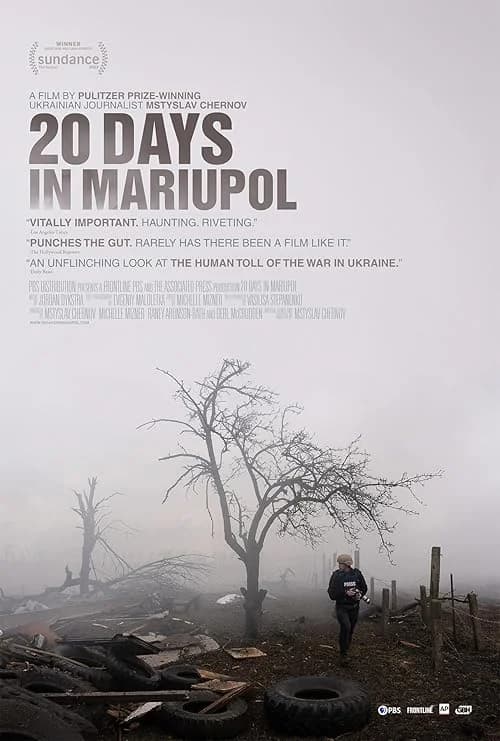
20 Days in Mariupol stands as one of the most vital and harrowing documentaries of our time, offering an unflinching, ground-level view of the early days of Russia's full-scale invasion of Ukraine in 2022. The film follows Associated Press journalist Mstyslav Chernov and his team, who found themselves trapped in the besieged port city of Mariupol. With remarkable courage, they continued their work, becoming the last international journalists in the city and capturing images that would shock the world.
The documentary's power lies in its raw, immediate footage and first-person perspective. Director Mstyslav Chernov crafts a tense, cinematic narrative from the chaos, documenting not just the bombardment of the city but the profound human cost—the destruction of a maternity hospital, the mass graves, and the resilience of civilians under siege. The film avoids commentary, letting the images and the experiences of the journalists and citizens tell the story with devastating clarity.
Winner of the Academy Award for Best Documentary Feature, 20 Days in Mariupol is essential viewing. It serves as both a crucial historical record of war crimes and a testament to the importance of frontline journalism. The film is difficult to watch but impossible to ignore, making a compelling argument for why these stories must be seen. It is a profound cinematic experience that underscores the human reality behind the headlines.
The documentary's power lies in its raw, immediate footage and first-person perspective. Director Mstyslav Chernov crafts a tense, cinematic narrative from the chaos, documenting not just the bombardment of the city but the profound human cost—the destruction of a maternity hospital, the mass graves, and the resilience of civilians under siege. The film avoids commentary, letting the images and the experiences of the journalists and citizens tell the story with devastating clarity.
Winner of the Academy Award for Best Documentary Feature, 20 Days in Mariupol is essential viewing. It serves as both a crucial historical record of war crimes and a testament to the importance of frontline journalism. The film is difficult to watch but impossible to ignore, making a compelling argument for why these stories must be seen. It is a profound cinematic experience that underscores the human reality behind the headlines.